<?xml version="1.0" encoding="utf-8"?>
<rss version="2.0" xmlns:content="http://purl.org/rss/1.0/modules/content/">
	<channel>
		
		<title>AIDS Foundation East-West Press releases</title>
		<link>http://www.afew.org/</link>
		<description></description>
		<language>en</language>
		<image>
			<title>AIDS Foundation East-West Press releases</title>
			<url>http://www.afew.org/EXT:tt_news/ext_icon.gif</url>
			<link>http://www.afew.org/</link>
			<width></width>
			<height></height>
			<description></description>
		</image>
		<generator>TYPO3 - get.content.right</generator>
		<docs>http://blogs.law.harvard.edu/tech/rss</docs>


		<lastBuildDate>Mon, 06 Sep 2010 16:39:00 +0200</lastBuildDate>
		
		
		<item>
			<title>Vienna Express 2010: Towards Universal Access</title>
			<link>http://www.afew.org/newsroom/news-single-view/?tx_ttnews%5Btt_news%5D=404&#38;cHash=d59d0ab0f0</link>
			<description>On July 18-23, 2010, The XVIII International AIDS Conference (AIDS 2010) will take place in Vienna,...</description>
			<content:encoded><![CDATA[<p class="align-justify"><img src="uploads/RTEmagicC_AFEWfinalklein3_01.png.png" style="FLOAT: left" height="275" width="200" alt="" />On July 18-23, 2010, The XVIII International AIDS Conference (AIDS 2010) will take place in Vienna, Austria. This bi-annual event is the premier gathering for those working in the field of HIV, as well as policy makers, persons living with HIV and other individuals committed to ending the pandemic. With the 2010 deadline for universal access to prevention and treatment coming up,&nbsp;this year’s conference – which looks set to attract over 25,000 participants – offers a vital chance to press for urgent action.</p>
<p class="align-justify">The focus of this conference in Vienna, a city which has served as a crossroads between Western and Eastern Europe throughout its history, will be HIV/AIDS in Eastern Europe and Central Asia. <i>AIDS Foundation East-West (AFEW)</i> is organising the Vienna Express 2010: Towards Universal Access, which will link up a series variety of public events across Western Europe, Eastern Europe and Central Asia in the build-up to the conference in order to draw wider public and media attention to the epidemic in the region and promote the goal of universal access to HIV/AIDS prevention, treatment, care and support.</p>
<h1 class="align-justify">HIV/AIDS in Eastern Europe and Central Asia</h1>
<p class="align-justify">The Eastern Europe and Central Asian Region (EECA) is currently home to 1.5 million people living with HIV, cases that are primarily fuelled by injecting drug use. In its activities around AIDS 2010, <i>AFEW</i> will concentrate on the need for expansion of services for injecting drugs users and implementation of harm reduction methodologies. The campaign will also highlight the needs and rights of other key populations at risk (such as street children, sex workers and prisoners).</p>
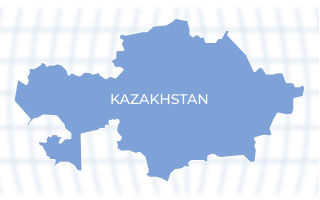
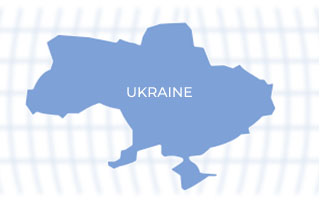
<p class="align-justify">In EECA, universal access to prevention and treatment for these key populations remains a remote prospect. For example, in 2007, only 315, 000 (or 9%) of the 3.4 million injecting drug users (IDUs) living in the region, were covered by HIV prevention and care services (largely under initiatives financed by the Global Fund). Furthermore, the numbers of people living with HIV who have access to antiretroviral treatment remain very low: Kazakhstan - 41%, Kyrgyzstan - 22.6%, and Ukraine - 35% (Source: <a href="http://www.unaids.org/en/KnowledgeCentre/HIVData/CountryProgress/2007CountryProgressAllCountries.asp" title="Opens external link in new window" target="_blank" class="external-link-new-window" >National Reports on Monitoring Progress towards the UNGASS Declaration of Commitment on HIV/AIDS - 2008</a>). As a matter of UNGASS policy, these figures do not provide a breakdown on how people were infected. However, since most people living with HIV in the region are injecting drug users, we may extrapolate these access rates to the IDU population.</p>
<h1 class="align-justify"><em>AFEW</em> Activities for AIDS 2010</h1>
<p class="align-justify"><img src="uploads/RTEmagicC_AFEWoudRUSklein3_cut_01.png.png" style="FLOAT: left" height="330" width="300" alt="" />In the fortnight before the conference, the Vienna Express 2010: Towards Universal Access will travel the Eastern and Western routes to Vienna. Local partners will organise public events, including <b>concerts, street campaigns, roundtables and visits to best-practice project sites</b>, to promote HIV/AIDS awareness to the media, public and political leaderships of their countries. </p>
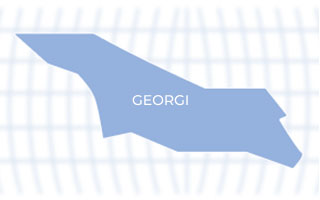
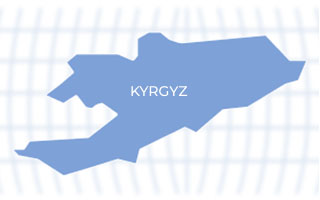
<p class="align-justify">AFEW and its partners will provide daily updates on these events and organise coverage of the HIV/AIDS epidemic on <b>a live blog at </b><a href="http://www.viennaexpress.org/" target="_blank" ><b>www.viennaexpress.org</b></a>, in radio and TV announcements, weblogs, websites, and in photo and film reportsand on AFEW’s and its partners’ websites. So far, tours from Moscow and Amsterdam are planned, but other routes (for instance, through the Balkans or Baltic states) are under consideration. The Vienna Express events will take place in Belgium, Georgia, Germany, Kazakhstan, Kyrgyzstan, Macedonia, Moldova, the Netherlands, Russia and Tajikistan. </p>
<p class="align-justify">Extracts from this coverage will be shown during the Vienna Conference and at regional conference hubs. Along the way, participants and supporters will be invited to write their messages, wishes and demands on leaves for an <b>East-West Wish Tree</b>, which will form the centre-point of the opening ceremony of AIDS2010 on July 18. </p>
<h1 class="align-justify">What We Aim to Achieve</h1>
<p class="align-justify">It is envisaged that the campaign will produce:</p><ul><li><div class="align-justify">Increased political and public support for harm reduction activities;</div></li><li><div class="align-justify">A clear focus on harm reduction and universal access to HIV prevention, treatment, care and support in Eastern Europe and Central Asia (EECA) at AIDS 2010;</div></li><li><div class="align-justify">Local festivals and public events on the way to Vienna garnering public and political support for harm reduction;<br />United action by NGOs, UN organisations and governmental bodies in raising awareness of harm reduction and universal access;</div></li><li><div class="align-justify">The East-West Wish Tree will bring the voices of people from the region to the conference;</div></li><li><div class="align-justify">Creative, informational and media initiatives, including reporting and comment on harm reduction in the media in Western Europe, Eastern Europe and Central Asia; coverage in blogs, Twitter, You-Tube, the <em>AFEW</em> website, etc.; publication of IEC materials about harm reduction to update and inform the public on health issues during the tour; and short films that can be shown at AIDS 2010.</div></li></ul><h1 class="align-justify">&nbsp;</h1>
<h1 class="align-justify">Contacts</h1>
<p class="align-justify">If you are interested in sponsoring, funding or getting involved in <i>AFEW</i>'s initatives in the run-up to Vienna 2010, please contact:</p>
<p class="bodytext">Anke van Dam, Director of Programmes &amp; Operations, <a href="javascript:linkTo_UnCryptMailto('nbjmup+bolf_wbo_ebnAbgfx/psh');" target="_blank" >anke_van_dam(at)afew.org</a><br />Tanne de Goei, Project Consultant, <a href="javascript:linkTo_UnCryptMailto('nbjmup+uboof_ef_hpfjAbgfx/psh');" target="_blank" >tanne_de_goei(at)afew.org</a></p>
<p class="bodytext"><a href="fileadmin/data/2010/Vienna_press_release_FINAL.pdf" title="Initiates file download" class="download" >Download the press release</a></p>]]></content:encoded>
			<category>Events</category>
			<category>In the Spotlight</category>
			<category>Press releases</category>
			
			
			<pubDate>Fri, 18 Jun 2010 08:32:00 +0200</pubDate>
			
		</item>
		
		<item>
			<title> AFEW Brings the Latest Client Management Approaches to Perm </title>
			<link>http://www.afew.org/newsroom/news-single-view/?tx_ttnews%5Btt_news%5D=560&#38;cHash=2ef8796759</link>
			<description>In March, AIDS Foundation East-West (AFEW) held two major training events in the city of Perm....</description>
			<content:encoded><![CDATA[<div><p class="align-justify">In March, <i>AIDS Foundation East-West (AFEW)</i> held two major training&nbsp;events in the city of Perm. &nbsp;On March 1-3, as part of its project ‘Improving Access to HIV Prevention and Care Programmes for Injecting Drug Users and in Prison Settings in the Russian Federation’, <i>AFEW</i> held a three-day seminar for professionals involved in the implementation of START programmes for prisoners.</p></div><div><p class="align-justify">Transitional Case Management (or the ‘START programme’) is a client management model for newly released prisoners, which focuses on HIV/STI prevention and helps clients to make healthy start to life on the outside.</p></div><div><p class="align-justify">The purpose of the seminar, which was entitled <b>‘Client Management for Vulnerable Groups and START Components for Social Workers’</b>, was to build essential skills for professionals working with newly released prisoners. Topics included: client management technologies, one-to-one counselling techniques and motivational interviewing. The event gave participants a valuable opportunity not only to share their experiences with colleagues from other regions of the country, but also to forge plans for long-term cooperation.&nbsp;</p></div><div><p class="align-justify">This initial event demonstrated the clear need for continuous training of professionals on START programmes. They need to acquire a wide range of skills in order to implement such long-term prevention programmes and successfully reduce risky behaviours among clients.&nbsp;</p>
<p class="align-justify">Aside from this packed schedule, participants were invited to attend an unofficial event, where prizes were handed out to the best social workers and the best social bureau. They also visited the Kungur Ice Cave, which is a one of the most popular tourist attractions in the Urals.</p></div><div class="align-justify"><p class="bodytext">On March 4, <i>AFEW</i> organised a working meeting on ‘<b>Organisation of Services for Vulnerable Women Living with HIV’</b>, which provided guidance on the creation of a self-help group for women in Perm and service provision to women living with HIV under a client management scheme. <i>AFEW</i> trainers addressed such topics as contemporary HIV prevention programmes, the essential building blocks for effective client management and the role of partner networks. During the seminar, the participants, who included representatives of NGOs and service providers, discussed the possibilities for starting up services that are currently unavailable to women living with HIV in Perm.</p></div><div class="align-justify"><p class="bodytext">Read more about the project <a href="cetest-firstpage/all-afew-projects/project/?tx_afewregions_pi1[project]=18&amp;cHash=603bd022d3" title="Opens external link in new window" class="external-link-new-window" >‘Improving Access to HIV Prevention and Care Programmes for Injecting Drug Users and in Prison Settings in the Russian Federation’</a>&nbsp;</p></div><div></div>]]></content:encoded>
			<category>Press releases</category>
			<category>In the Spotlight</category>
			
			
			<pubDate>Wed, 10 Mar 2010 09:22:00 +0100</pubDate>
			
		</item>
		
		<item>
			<title>Rapid Spread of HIV/AIDS Focus of Exhibition ‘The Neglected’</title>
			<link>http://www.afew.org/newsroom/news-single-view/?tx_ttnews%5Btt_news%5D=377&#38;cHash=ead619ee24</link>
			<description>From 20th November – 7th December 2009, AIDS Foundation East-West (AFEW) is holding a photo...</description>
			<content:encoded><![CDATA[<h2 class="align-justify"><span style="color: rgb(71, 71, 71); font-weight: normal; font-size: 13px; " class="Apple-style-span">From 20th November – 7th December 2009, <em>AIDS Foundation East-West (AFEW)</em> is holding a photo exhibition entitled ‘The Neglected’ / Беспризорники’ at Cultural Centre De Warande in Turnhout, Belgium. The aim is to highlight the rapid spread of HIV/AIDS in Eastern Europe and Central Asia and the plight of the people who are affected by it.</span></h2>
<p class="align-justify"><img width="210" height="140" style="FLOAT: left" src="uploads/RTEmagicC_andrey_02_120x80cm.jpg.jpg" alt="" />‘The Neglected’ / ‘Беспризорники’ is being held by <i>AFEW</i> in partnership with the photographer David Gillanders. The works on display illustrate the neglect of vulnerable young women, intravenous drug users, prisoners and street children in Eastern Europe and Central Asia (EECA) – the region with the fastest growing HIV/AIDS epidemic in the world. </p>
<p class="align-justify">At present, an estimated 1.5 million people are living with HIV/AIDS and more than 58,000 have already died of AIDS in the region. In 2007 alone, the region witnessed 110,000 new cases of HIV. While high rates of injecting drug use among young people are driving the epidemic, an increasing percentage of newly registered cases are due to unprotected heterosexual contact.</p>
<h2 class="align-justify">‘The Neglected’ / ‘Беспризорники is on show from 20th November - 7th December 2009, every day from 09.00 till 18.00 in Cultural Centre De Warande, Warandestraat 42, 2300, Turnhout, Belgium. More info on <a href="http://www.warande.be/index.php?id_act=4240&amp;ps=tentoondetail" target="_blank" >http://www.warande.be/index.php?id_act=4240&amp;ps=tentoondetail</a></h2>
<p class="align-justify">&nbsp;</p>
<p class="align-justify"><i><b>AIDS Foundation East-West (AFEW)</b></i><br /><i>AIDS Foundation East-West (AFEW)</i> is a Dutch, non-governmental, public health organisation that was founded in 2001 to address the spread of HIV/AIDS in Eastern Europe and Central Asia (EECA). It has over 100 employees engaged in the development and implementation of programmes that improve prevention, treatment, care and support services. A particular focus is placed on providing specialised assistance to the region’s most vulnerable groups: young people, women and children, injecting drug users and prisoners.</p>
<p class="align-justify"><b>David Gillanders</b><br />Since its foundation in 2001, <i>AFEW</i> has crossed paths many times with the prize-winning photographer David Gillanders. David is a full-time photojournalist who focuses his work on social and humanitarian issues around the world. His work is infused with a heartfelt compassion for the people he works with and a strong sense of purpose. David has won several prizes including the UNICEF Photo of the Year 2005 and he was invited to participate in the World Press Photo Joop Swart Master Class in Amsterdam. </p>
<p class="align-justify"><b>Project Positive</b><br />The exhibition ‘The Neglected’ / ‘Беспризорники’ is part of a series of activities organised in the city of Turnhout that are dedicated to the theme week ‘Project Positive’. It is being held in cooperation with the Global Council, the Family and Health Council and gay, lesbian and bi-sexual organisations in Turnhout. The events are dedicated to the Day of the Child on 20th November and World AIDS Day on 1st December.</p>
<h2 class="align-justify">For more information, please contact <a href="javascript:linkTo_UnCryptMailto('nbjmup+bgfxAwboppsufowboppsu/om');" title="Opens window for sending email" class="mail" >Inger Clancy</a></h2>]]></content:encoded>
			<category>Press releases</category>
			
			
			<pubDate>Fri, 13 Nov 2009 12:15:00 +0100</pubDate>
			
		</item>
		
		<item>
			<title>Dutch Parliament Must Stop AIDS Cutbacks</title>
			<link>http://www.afew.org/newsroom/news-single-view/?tx_ttnews%5Btt_news%5D=355&#38;cHash=1af621e4c8</link>
			<description>The Ministry of Development of the Netherlands is planning to slash its budget for humanitarian aid...</description>
			<content:encoded><![CDATA[<p class="align-justify">The Ministry of Development of the Netherlands is planning to slash its budget for humanitarian aid programmes, with 50% of the cutbacks targeting HIV/AIDS initiatives. Today, Dutch AIDS organisations have joined together to condemn this decision as irresponsible and incomprehensible. In the run-up to the parliamentary debate of the issue on Monday 2 November, they have asked the Dutch parliament to reject the cutbacks. If the cuts go ahead, more than 100,000 people will no longer receive the medicine they need to stay alive, and the government will cease all investment into vaccination research.</p>
<h2 class="align-justify">The cuts</h2>
<p class="align-justify">In total, the budget for funding international aid organisations will be cut by more than €100 million. Almost half that amount will be withdrawn from programmes that tackle HIV/AIDS. For example, the annual Dutch contribution to UNAIDS, the United Nations programme on HIV/AIDS, is to be reduced by one quarter, in other words, by €9 million. The Global Fund to Fight AIDS, Tuberculosis and Malaria will receive up to 31% less funding (€28.1 million) and UNFPA (the United Nations programme on sexual health) will have to do with 11% (€6.6 million) less. Meanwhile, contributions to the development of vaccinations and other new prevention methods will completely stop as of next year. </p>
<h2 class="align-justify"><br />Irresponsible choices</h2>
<p class="align-justify">The choices made are incomprehensible, having the effect of punishing programmes that have repeatedly demonstrated their worth and effectiveness. The Global Fund, which the Netherlands is set to chair in the near future, has proven to be one of the most effective donors in the fight against HIV/AIDS, TB and malaria. No other international institution or bilateral donor has demonstrated comparable results or the level of leadership in the fight against AIDS. Meanwhile, UNFPA works across the world to improve the sexual health of women and girls, so that they can better protect themselves against HIV infections. The decision to withdraw funding from vaccine research is yet more astounding in the light of recent breakthroughs and the Netherlands reputation as a pioneering donor in this field.</p>
<h2 class="align-justify">AIDS treatment at risk</h2>
<p class="align-justify">The global economic crisis is taking a disproportionate toll on people in developing countries. They may not have caused the crisis, but they are certainly bearing the brunt, as more and more countries announce that they can no longer sustain their HIV/AIDS programmes at current levels. This means that hundreds of thousands of people will no longer receive the medicines on which their lives depend. At the same time, hope recedes for the millions of people who still do not have access to these medicines. </p>
<h2 class="align-justify">Letter to the parliament</h2>
<p class="align-justify">The letter was signed by <i>AIDS Foundation East-West (AFEW)</i>, AIDS Fonds, GNP+ (Global Network of People Living with HIV/AIDS), HCI (Health Connections International), IAVI (International AIDS Vaccine Initiative), ICSS (International Civil Society Support), KNCV Tuberculosis Foundation and STOP AIDS NOW!.</p>
<p class="align-justify"><a href="fileadmin/data/Newsroom/PR_Dutch_Parliament_Must_Stop_AIDS_Cutbacks.pdf" title="Initiates file download" class="download" >Press release - &quot;Dutch Parliament Must Stop AIDS Cutbacks&quot; (PDF)</a></p>]]></content:encoded>
			<category>In the Spotlight</category>
			<category>Press releases</category>
			
			
			<pubDate>Mon, 02 Nov 2009 14:49:00 +0100</pubDate>
			
		</item>
		
		<item>
			<title>&lt;i&gt;AFEW&lt;/i&gt; and EU HIV/AIDS Civil Society Forum welcome the new EU HIV/AIDS strategy 2009-2013</title>
			<link>http://www.afew.org/newsroom/news-single-view/?tx_ttnews%5Btt_news%5D=349&#38;cHash=b761133928</link>
			<description>AIDS Foundation East-West (AFEW) joins the statement of EU HIV/AIDS Civil Society Forum on the new...</description>
			<content:encoded><![CDATA[<p class="align-justify"><i>AIDS Foundation East-West (AFEW)</i> joins the statement of EU HIV/AIDS Civil Society Forum on the new European Commission HIV/AIDS policy 2010-2013. It especially endorses the leadership the Commission shows in tackling the epidemic in neighbouring countries, such as the Russian Federation, where the situation has become critical. Funding and advocacy for harm reduction efforts are needed now more than ever, also from the European Commission.</p>
<p class="bodytext">For the full press release, <a href="fileadmin/data/Newsroom/CSF_press_release_re_EU_strategy_for_combating_HIV_-_27_Oct_09.pdf" title="Initiates file download" class="download" >click here</a>.</p>]]></content:encoded>
			<category>Press releases</category>
			
			
			<pubDate>Wed, 28 Oct 2009 14:03:00 +0100</pubDate>
			
		</item>
		
		<item>
			<title>Civil Society Calls for the Netherlands to Step up Contributions to the Global Fund </title>
			<link>http://www.afew.org/newsroom/news-single-view/?tx_ttnews%5Btt_news%5D=151&#38;cHash=42bd9b7611</link>
			<description>The Hague, March 12th 2009. Today, Dutch civil society organisations have called upon the...</description>
			<content:encoded><![CDATA[<p class="align-justify"><b>The Hague, March 12th 2009.</b> Today, Dutch civil society organisations have called upon the Netherlands to continue and step up its financial commitments to the Global Fund to Fight AIDS, Tuberculosis and Malaria. The Global Fund, which was established in 2001 by the G8 countries, has consistently demonstrated impressive progress in fighting the three target diseases by implementing proven and effective approaches to prevention and treatment across the world. The task now is to increase the scope and reach of this work. A renewed commitment to funding from countries like the Netherlands will enable the Global Fund to extend its fight against AIDS, Tuberculosis and Malaria and, at the same time, strengthen national health systems. Furthermore, the Netherlands is playing an increasingly active role in the Global Fund’s strategy, which means that we can ensure effective spending and quality maintenance.</p>
<p class="align-justify">In 2008 applications to the Global Fund from developing countries increased 2.5 times on 2007. Only those requests that meet the strictest qualitative requirements are given the stamp of approval by the fund. In the light of a significant increase in viable and high-quality applications from developing countries, the budget for 2008-2010 is no longer sufficient. Only US$3 billion are available for the period up to 2010, whereas an estimated $8 billion is needed to meet all funding demands and to finance new programmes. </p>
<p class="align-justify">The urgent need for increased commitment to funding was highlighted at a conference entitled ‘Scaling-up for Health: Ways to Make it Work’, which was held on March 12 in Clingendeal, the Dutch Institute for International Relations in The Hague. Michel Kazatchkine, Director of the Global Fund and former AIDS-Ambassador for France, presented his organisation’s recent results to the assembled politicians, NGO representatives and business people. He also discussed new financing opportunities that could enable a wider and more effective response to epidemics across the world. </p>
<p class="align-justify">In their presentation, the KNCV Tuberculosis Foundation provided insight into how they supported the Kenyan Ministry of Public Health for over 25 years and equipped the Kenyan government to contribute to its own capacity and planning. International Civil Society Support emphasised that investments made via the Global Fund are crucial in mobilising civil society organisations to fight against the three diseases and help the most vulnerable groups.</p>
<p class="align-justify">Rational and cost-effective use of resources is always a priority, particularly in the context of the current financial crisis. The results that the Global Fund has consistently demonstrated in recent years and its effective financing model are the best assurances that funds will be used efficiently and meaningfully. Renewed commitment is required to fully exploit the capacity that exists already and to extend successful programmes. Based on a precise evaluation of the needs and implementation capacities of developing countries, the Global Fund aims to attract an additional US$5 billion in the period up to 2010. </p>
<p class="align-justify">The following organisations have pledged their support to this appeal to the government of the Netherlands: </p>
<p class="align-justify">•&nbsp;Aids Fonds<br />•&nbsp;<i>AIDS Foundation East-West (AFEW)</i><br />•&nbsp;Cordaid<br />•&nbsp;International Civil Society Support<br />•&nbsp;KNCV Tuberculoses Foundation<br />•&nbsp;Stop Aids Now!</p>
<p class="align-justify"><b>About the Global Fund</b></p>
<p class="align-justify">The Global Fund to Fight AIDS, Tuberculosis and Malaria provides 60% of all funding for tuberculosis and malaria programmes worldwide, and a quarter of all funding for HIV/AIDS programmes. That makes the fund one of the single most important players in international health. The Global Fund is committed to performance-based financial support, i.e. based on realistic, verifiable plans and clear results. Developing countries set their own priorities and submit their applications in line with these requirements.</p>
<p class="align-justify">Since its founding in 2002, the Global Fund has achieved impressive results:<br />•&nbsp;Two million people have been treated with ARV medicines;<br />•&nbsp;4.6 million people have been treated for tuberculosis; <br />•&nbsp;70 million mosquito nets have been distributed to prevent malaria;<br />•&nbsp;In several African countries sickness and mortality through malaria have been halved;<br />•&nbsp;The number of new tuberculosis infections are falling worldwide, mainly because of successful programmes in India, China and Indonesia;<br />•&nbsp;AIDS mortality among the working population is decreasing in several African countries. </p>
<p class="align-justify">More information about the Global Fund can be found at: <a href="http://www.theglobalfund.org/" target="_blank" >www.theglobalfund.org</a></p>
<p class="align-justify">&nbsp;</p>]]></content:encoded>
			<category>Press releases</category>
			<category>In the Spotlight</category>
			
			
			<pubDate>Wed, 18 Mar 2009 14:38:00 +0100</pubDate>
			
		</item>
		
		<item>
			<title>Global Fund Appeal</title>
			<link>http://www.afew.org/newsroom/news-single-view/?tx_ttnews%5Btt_news%5D=115&#38;cHash=db80ee3250</link>
			<description>Created in 2001 by Kofi Annan, the Global Fund, according to many public health experts, is the...</description>
			<content:encoded><![CDATA[<p class="align-justify">Created in 2001 by Kofi Annan, the Global Fund, according to many public health experts, is the most innovative, far-reaching, results- driven health financing mechanism in the world. Globally, it provides two-thirds of the external financing for TB and malaria, and a quarter of the financing for HIV/AIDS. Pasted below is a letter to the Finance Ministers of the G7 who met in Rome, Italy on February 14, 2009. The letter urges G7 nations to take a leading role by <b>pledging new money to the Global Fund to Fight AIDS, Tuberculosis and Malaria</b> which is facing a $5 billion dollar gap in funding for 2009 and 2010.</p>
<p class="align-justify">The <b>5 billion dollar gap</b> is not a crisis akin to the global financial problems we are currently experiencing. The gap actually exists because the Global Fund and applicant countries have done such a good job of increasing technical expertise and capacity such that triple the number of proposals passed the technical review in 2008 ($3.1 billion compared to $1.1 billion in the previous round). Endemic countries have stepped up to the plate in submitting strong, technically sound proposals, but donor <b>country pledges have</b> <b>not kept pace</b>.</p>
<p class="align-justify">If not supported by Global Fund health programs, some of the most vulnerable populations in the world will feel double or triple the impact of this international economic crisis. <b>G7 countries must be encouraged to increase commitments to the Global Fund.</b></p>
<p class="align-justify">Please sign the attached letter and urge G7 governments to keep their promises to a fully funded Global Fund that will continue to save millions of lives around the world. Sign-ons are still being accepted for this letter: organization name and country can be sent to <a href="javascript:linkTo_UnCryptMailto('nbjmup+wxvAsftvmut/psh');" >vwu(at)results.org</a></p>
<p class="align-justify">Thank you in advance for your support.</p>
<p class="align-justify">More information is available at <a href="http://www.action.org/" target="_blank" >www.action.org</a></p>
<p class="align-justify"><b><a href="fileadmin/data/Newsroom/Finance_Ministers_Global_Fund_Letter_Feb_09.pdf" >Download the letter in English</a> </b></p>
<p class="bodytext">&nbsp;</p>]]></content:encoded>
			<category>In the Spotlight</category>
			<category>Press releases</category>
			<category>Petitions</category>
			
			
			<pubDate>Sat, 28 Feb 2009 14:38:00 +0100</pubDate>
			
		</item>
		
		<item>
			<title>First Drop-in Centre for Street Children Opens in Ukrainian Capital Kiev</title>
			<link>http://www.afew.org/newsroom/news-single-view/?tx_ttnews%5Btt_news%5D=66&#38;cHash=316dd014f4</link>
			<description>On 3 February 2009, the opening of the Kiev Drop-in Centre for Children was launched as part of a...</description>
			<content:encoded><![CDATA[<p class="bodytext">On 3 February 2009, the opening of the Kiev Drop-in Centre for Children was launched as part of a joint project by <b><i>AIDS Foundation East-West (AFEW)</i></b> and the Kiev Municipal Social Services for Children, Families and Youth. The project is financed by the Dutch AIDS Fund, Danish AIDS Fund and Johnson&amp;Johnson. <br /></p>
<p class="bodytext">The <b>opening ceremony</b> and <b>press conference</b> were attended by representatives of partner organisations, Ukrainian Ministry for Children, Families and Youth, Kiev City Council, youth-oriented NGOs, journalists and other stakeholders. The launch was a lively and emotional event for many of the participants, who are all concerned about issues affecting street children and actively involved in improving their lot. Representatives of one of the project’s donors – the Dutch <!--[if !vml]--><!--[endif]-->AIDS Centre arrived in Kiev&lt;/st1:place to be present at the opening ceremony.</p>
<p class="bodytext">At present, there are no statistics for the number of children living on the streets of the Ukraine. Estimates by specialists and organisations working in this field vary from &lt;b&gt;40,000 to as many as 300,000</b>. Life on the streets, high-risk behaviours and difficulties in accessing essential social, medical and psychological care mean that these children are highly vulnerable to HIV and sexually transmitted diseases. For this reason, ensuring that street children have better <b>access to support and services that help in reducing risk of HIV and STDs</b> is one of the main aims of the new Drop-in Centre. <br /></p>
<p class="bodytext"><!--[if gte vml 1]-->Over the past year, <b>major construction work</b> has been carried out to transform the old and dilapidated premises that were ear-marked for the centre into a welcoming and comfortable place for children, including playrooms and classrooms, kitchens and facilities for psychologists and educators. <br /></p>
<p class="align-justify"><b>Services already on offer</b> to children at the centre include: medical check-ups, consultations and treatment; referral of children to other medical services; consultations with social workers, lawyers and psychologists; as well as educational and recreational sessions. Children can also come to the centre to receive food and clean clothes, as well as to use the showers and washing facilities. Staff are also poised to conduct prevention and health promotion work using interactive teaching methods, multi-media and face-to-face contact with specialists.&nbsp; <br /></p>
<p class="bodytext">&nbsp;</p>]]></content:encoded>
			<category>Press releases</category>
			
			
			<pubDate>Tue, 03 Feb 2009 15:17:00 +0100</pubDate>
			
		</item>
		
		<item>
			<title>Candlelight vigil in Amsterdam on 28 January 2009 for HIV/AIDS victims in Eastern Europe and Central Asia</title>
			<link>http://www.afew.org/newsroom/news-single-view/?tx_ttnews%5Btt_news%5D=110&#38;cHash=73c2d3a914</link>
			<description>In Eastern Europe and Central Asia the HIV/AIDS epidemic is spreading faster than anywhere else in...</description>
			<content:encoded><![CDATA[<p class="bodytext">In Eastern Europe and Central Asia the HIV/AIDS epidemic is spreading faster than anywhere else in the world. The main cause is the high rate of (experimental) injecting drug use among young people. Of the three million injecting drug users in Eastern Europe and Central Asia, one million live with HIV/AIDS. Prevention in this part of the world is absolutely essential. </p>
<p class="bodytext">To underline the pressing urgency of the surging HIV/AIDS epidemic in this region, AIDS Foundation East-WestM (AFEW) is organising a candlelight vigil on 28 January 2009, at the start of the Donor Conference on Harm Reduction. A thousand candles will be lit on the Prins Hendrikkade in Amsterdam, across the street from Barbizon Palace Hotel. </p>
<p class="bodytext">We would like to invite participants of the international donor conference, before entering the hotel to attend the gala dinner, to light a candle with us. Each candle represents a thousand individuals in Eastern Europe and Central Asia who live with HIV/AIDS as a result of injecting drug use, and stands for your personal commitment to their fate. </p>
<p class="bodytext">AFEW is a Dutch, non-governmental, humanitarian public health organisation, working to reduce the impact of HIV/AIDS in Eastern Europe and Central Asia among vulnerable groups. More info at <a href="http://www.afew.org/" target="_blank" >www.afew.org</a>.</p>
<p class="bodytext">We hope that you will join us in commemorating the lives of these individuals on the 28th.</p>]]></content:encoded>
			<category>In the Spotlight</category>
			<category>Press releases</category>
			
			
			<pubDate>Fri, 23 Jan 2009 13:54:00 +0100</pubDate>
			
		</item>
		
		<item>
			<title>Debate on 27 January 2009 in Amsterdam, The Netherlands: ”HIV-prevention: a matter of urgency for almost 16 million injecting drug users world wide!”</title>
			<link>http://www.afew.org/newsroom/news-single-view/?tx_ttnews%5Btt_news%5D=112&#38;cHash=f99bf92850</link>
			<description>AIDS Foundation East-West (AFEW), a Dutch non-governmental humanitarian public health organisation,...</description>
			<content:encoded><![CDATA[<p class="align-justify"><i>AIDS Foundation East-West (AFEW),</i> a Dutch non-governmental humanitarian public health organisation, working to reduce the impact of HIV and AIDS in Eastern Europe and Central Asia among vulnerable groups such as injecting drug users, prisoners and sex workers.<i> AFEW</i> takes an innovative and proactive approach by actively seeking international and regional partnerships. </p>
<p class="align-justify">With almost 16 million injecting drug users worldwide who have the risk of contracting HIV/ AIDS, often as a result of unsafe drugs-use practices , HIV and AIDS prevention becomes an absolute must. There are 3 million injecting drug users in Eastern Europe and Central Asia alone, and this region is confronted with one of the fastest spreading HIV and AIDS epidemics in the world. Official statistics report some hundreds of thousands of registered HIV-infected people; experts however, estimate that there are 1.6 million HIV-infected people living in this region.<i> AFEW</i> intends to strengthen cooperation between the East and the West in the fight against the surging HIV epidemic by raising awareness among stakeholders regarding the extent of the problem today, and by calling on an international sense of responsibility not to abandon vulnerable groups in these countries. </p>
<p class="align-justify">The strong plea of <i>AFEW </i>and the HARP platform have resulted directly in the international donor conference which is to be held the 28th through the 30th January 2009 in Amsterdam. This invitational donor conference on Harm Reduction and HIV/AIDS, organised by the Dutch Ministry of Foreign Affairs, aims to persuade international players that action is needed in order to turn the tide and to offer targeted solutions to the millions of people who now live in insecurity about their health and their future. </p>
<p class="align-justify">In addition to the invitational conference,<i> AFEW</i> would like to use the moment to further an (inter)national dialogue and to create a large support base for harm reduction methodologies which will contribute to solutions for the future. </p>
<p class="align-justify">This is why, on the night preceding the conference, <i>AFEW</i> is organising an international debate. The debate will take place on 27 January 2009 beginning at 20.00 hours in ’De Balie’, Kleine-Gartmanplantsoen 10, in Amsterdam. National and international non-governmental organisations, governmental organisations and national and international politicians will take part in this debate. You too, are cordially invited to attend! </p>
<p class="align-justify">If you wish to attend, please register today. Upon registration, you will receive the final programme and a guest list. For the benefit of our international invitees, the debate will be conducted in English.</p>
<p class="align-justify">To register, please send an e-mail to <a href="javascript:linkTo_UnCryptMailto('nbjmup+bgfxAwboppsufowboppsu/om');" >afew(at)vanoortenvanoort.nl</a> or call Ms. Liselotte Zoetmulder, + 31 -(0)70 - 3691700.</p>]]></content:encoded>
			<category>In the Spotlight</category>
			<category>Press releases</category>
			
			
			<pubDate>Thu, 15 Jan 2009 13:58:00 +0100</pubDate>
			
		</item>
		
	</channel>
</rss>